Basements offer valuable space in homes, but they are often prone to water issues because they sit below ground level. When water makes its way into a basement, it can cause significant problems like mold growth, structural damage, and foundation weakening. One of the most effective ways to prevent these issues is by installing a well-designed basement drainage system. This guide will cover the importance of basement drainage, different system types, installation methods, and maintenance practices to keep your basement dry and protected.
Why Basement Drainage Systems are Essential
Basement drainage systems are critical for managing and preventing water infiltration. Without proper drainage, water can seep into your basement through several channels:
- Water Seepage through Basement Walls: Moisture from saturated soil surrounding your home can penetrate through small cracks or even porous walls.
- Hydrostatic Pressure: When groundwater builds up around your home, it creates pressure, forcing water into the basement through cracks and joints in the foundation.
- Improper Surface Drainage: Poorly designed grading, faulty gutters, or downspouts that discharge too close to the house can allow water to pool near the foundation, increasing the risk of water intrusion.
Unchecked water infiltration can lead to:
- Mold Growth: Moist basements are ideal breeding grounds for mold, which can cause health issues like allergies and respiratory problems.
- Foundation Damage: Over time, constant exposure to water weakens the foundation, causing cracks, bowing walls, and even foundation failure.
- Lower Property Value: Homes with basement water issues lose value, as buyers may be concerned about moisture damage, foundation problems, and potential flooding risks.
- Increased Energy Costs: High moisture levels make it harder to maintain a stable temperature in the home, forcing heating and cooling systems to work harder and raising energy bills.
Installing a drainage system helps mitigate these risks by managing and directing water away from your basement.
Types of Basement Drainage Systems
There are several types of basement drainage systems that you can use to protect your home from water intrusion. These systems are categorized as exterior or interior, depending on where they are installed.
1. Exterior Drainage Systems
Exterior drainage systems, sometimes referred to as perimeter drains or French drains, are installed outside the home to intercept water before it reaches the foundation.
- How They Work: Exterior drains involve digging a trench around the home’s foundation and placing a perforated pipe inside. The trench is then filled with gravel to allow water to flow through it and into the pipe, which directs water away from the house.
- Advantages:
- They prevent water from reaching the foundation, lowering the risk of water seepage into the basement.
- They are highly effective for homes in areas with heavy rainfall or high water tables.
- Disadvantages:
- Installation involves significant excavation around the foundation, which can disrupt landscaping.
- The cost is generally higher than that of interior systems due to the need for trenching and excavation.

2. Interior Drainage Systems
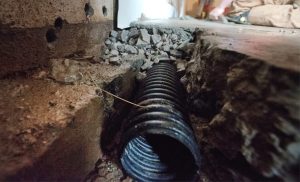
Interior drainage systems are installed inside the basement and are designed to manage water that has already entered the basement space.
- How They Work: Interior systems consist of a drainage pipe or channel placed beneath the basement floor along its perimeter. Water that seeps through the walls or floor is collected and channeled to a sump pump, which removes the water from the basement.
- Advantages:
- Easier and less expensive to install than exterior systems, since they don’t require excavation around the house.
- Suitable for homes experiencing hydrostatic pressure or water seepage through walls.
- Disadvantages:
- Interior systems deal with water after it has already entered the basement, rather than preventing it from entering in the first place.
- The effectiveness of the system relies on a sump pump to remove the water, which may require a backup power source in the event of an outage.
3. French Drains
French drains are a versatile solution that can be installed inside or outside the home to direct water away from the foundation.
- How They Work: A French drain involves placing a perforated pipe in a trench filled with gravel. Water flows into the trench, is collected by the pipe, and is carried away from the foundation to a safe discharge point.
- Advantages:
- Flexible system that works both inside and outside the basement.
- Effective for homes with moderate water issues and works well in tandem with other drainage solutions.
- Disadvantages:
- French drains can become clogged over time if not properly maintained.
- Installation requires trenching, which may disturb landscaping or basement floors.
4. Sump Pump Systems
Sump pumps are a key component of many basement drainage systems, particularly for homes that experience frequent water accumulation.
- How They Work: Sump pumps are installed in a sump pit located at the lowest point of the basement. Water flows into the pit, and when it reaches a certain level, the pump activates and removes the water, directing it away from the foundation to a drainage area.
- Advantages:
- Reliable way to remove water during heavy rainfall or floods.
- Sump pumps can be equipped with battery backups or water-powered backups, ensuring functionality during power outages.
- Disadvantages:
- Requires regular maintenance to ensure the pump is operational.
- The system is dependent on power, so a failure in the pump or electrical system can lead to basement flooding.
5. Downspout Extensions
While not a drainage system per se, downspout extensions play a key role in preventing water from pooling around the foundation.
- How They Work: Downspout extensions are added to the ends of a home’s downspouts to direct rainwater further away from the foundation. Ideally, water should be discharged at least several feet from the home.
- Advantages:
- Simple, cost-effective solution to prevent water from entering the basement.
- Reduces the overall amount of water pooling around the foundation.
- Disadvantages:
- Extensions can create tripping hazards if not properly placed.
- May not be sufficient on their own to handle severe water problems.
Installation of Basement Drainage Systems
Installing a basement drainage system usually requires professional expertise to assess the extent of the problem and determine the most appropriate solution.
- Initial Assessment: A contractor will evaluate the basement for water intrusion, examine the grading around the home, and look for other contributing factors like soil composition or faulty gutters.
- Selecting a Drainage System: Based on the assessment, the contractor will recommend either an exterior or interior system, or a combination of both, depending on the specific challenges the home is facing.
- Excavation and Installation: Exterior systems involve digging a trench around the foundation, while interior systems require cutting into the basement floor to install drainage channels.
- System Installation: After the trench or channel is prepared, the drainage pipes and gravel are placed, and the system is connected to a sump pump or discharge area.
- Finishing and Restoration: After installation, the trench is filled, and any disrupted areas such as landscaping or basement flooring are restored.
Maintaining Basement Drainage Systems
Proper maintenance of your drainage system is critical for long-term performance. Some best practices include:
- Keep Gutters Clean: Ensure that gutters and downspouts remain free of leaves, dirt, and other debris that can block water flow.
- Test Sump Pumps: Regularly test your sump pump to ensure it’s working correctly, especially before periods of heavy rainfall. Check for clogs and ensure the backup system is functional.
- Inspect for Clogs: French drains and other drainage pipes can accumulate sediment over time. Have them inspected and cleaned periodically to ensure they remain effective.
- Check Water Levels: Monitor your basement for any signs of moisture or water buildup after storms, and ensure the drainage system is working as intended.
A well-functioning basement drainage system is essential for preventing water damage, mold growth, and foundation problems. By selecting the appropriate drainage solution—whether it’s an exterior French drain, an interior drainage system, or a sump pump—you can protect your home from the costly effects of water infiltration. Proper installation and regular maintenance will ensure that your basement remains dry, safe, and usable for years to come.
Contact the Professionals at Ark Basement Services Today! (866) 488-3466

Mike Perry is the esteemed owner of ARK Basement Services, a premier company specializing in basement waterproofing and foundation repair services. Under Mike’s leadership, ARK Basement Services has established itself as a trusted leader in the industry, known for delivering high-quality, reliable solutions to homeowners facing basement and foundation issues. Mike’s commitment to excellence, combined with his extensive knowledge and experience in the field, has been instrumental in building a company that is dedicated to ensuring customer satisfaction and the longevity of their homes. His hands-on approach and dedication to utilizing the latest technologies and methods have set ARK Basement Services apart, making them a go-to provider for those in need of expert basement and foundation services. For more details on Mike Perry’s work and ARK Basement Services, visit their website at https://www.arkbasementservices.com/.