Many homeowners say the same thing:
“My basement has never flooded… until that last heavy rain.”
If you are dealing with a wet basement after heavy rain, it does not necessarily mean something suddenly broke. In most cases, the issue has been building quietly over time.
Heavy storms simply expose existing weaknesses in drainage, foundation protection, or groundwater control.
What Heavy Rain Really Does to the Soil Around Your Foundation
When rainfall is intense or prolonged, the soil surrounding your home becomes saturated. Once soil reaches capacity, it cannot absorb more water.
That excess water has to go somewhere.
Instead of draining away, it begins pressing against your foundation walls and underneath your basement floor. This increased pressure is often what turns a previously “dry” basement into a suddenly wet one.
Hydrostatic Pressure Explained Simply
Hydrostatic pressure sounds technical, but the concept is straightforward.
 When water builds up in the soil, it pushes outward and upward against your foundation. Concrete may look solid, but it is porous and contains microscopic pathways where moisture can travel.
During heavy rain, pressure increases dramatically. Water finds the path of least resistance, such as:
Small wall cracks
Floor-wall joints
Utility penetrations
Weak points in aging waterproofing systems
The result is water intrusion that seems to appear out of nowhere.
Why the Problem Often Gets Worse Over Time
A basement leaking after rain is rarely a one-time event.
Each heavy storm weakens materials a little more. Small cracks widen. Drainage systems become overwhelmed. Soil shifts and settles unevenly.
Over months or years, what started as minor dampness can evolve into:
Standing water along basement walls
Water rising through the floor
Bowing foundation walls
Mold growth in finished areas
Ignoring early warning signs allows the cycle to continue.
Drainage Issues Most Homeowners Miss
Exterior drainage problems are one of the most common causes of heavy rain basement problems.
Homeowners often overlook:
Clogged Gutters
When gutters overflow, rainwater cascades directly next to the foundation instead of being redirected safely away.
Short Downspouts
Downspouts that discharge too close to the home allow water to pool at the base of foundation walls.
Improper Grading
If the soil slopes toward the home instead of away from it, rainwater naturally flows toward the basement.
Blocked or Failing Drain Tile Systems
Older homes may have exterior drain systems that are clogged or deteriorated, reducing their ability to relieve groundwater pressure.
Signs Your Wet Basement Is More Than Just a Storm Issue
Not every wet basement is caused solely by extreme weather. Look for patterns.
Warning signs include:
Recurring moisture after moderate rain
Persistent musty odors
White powdery residue on walls
Cracks that seem to widen
Damp carpet edges in finished basements
If moisture returns consistently, the issue is structural or drainage-related, not just weather-related.
Professional Waterproofing Solutions That Stop the Cycle
Fixing a wet basement after heavy rain requires addressing water movement, not just cleaning up afterward.
Interior Drainage Systems
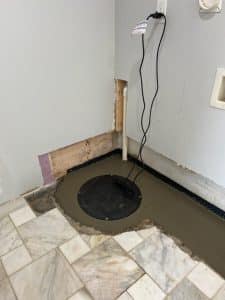
These systems collect groundwater at the perimeter of the basement floor and redirect it safely to a sump pump before it spreads.
Sump Pump Installation or Upgrade
A properly sized sump pump removes collected water efficiently during heavy storms.
Wall Vapor Barriers
Vapor barriers prevent moisture from evaporating into basement air, improving comfort and air quality.
Exterior Drainage Improvements
In some cases, correcting grading, extending downspouts, or improving gutter systems reduces water pressure against the foundation.
A professional evaluation determines the combination of solutions that best fits your home.
Why Quick Fixes Rarely Work
Temporary measures like sealants, surface patches, or shop vacuums address symptoms but not causes.
Without relieving hydrostatic pressure and improving drainage, water will return during the next major rainfall.
Long-term protection requires managing water before it becomes visible damage.
Protecting Your Basement Before the Next Storm
 Heavy rain events are becoming more frequent in many regions. Waiting for another storm to test your basement can be risky.
Preventative waterproofing not only protects against flooding but also:
Preserves foundation stability
Protects finished basement investments
Reduces mold risk
Improves indoor air quality
Increases overall home value
Being proactive is far less stressful than reacting to damage.
FAQs About Wet Basements After Rain
Why does my basement only leak during heavy storms?
Heavy rain increases groundwater pressure beyond what your current drainage system can handle.
Does this mean my foundation is failing?
Not necessarily, but repeated water intrusion can lead to structural problems over time.
Will sealing visible cracks stop the problem?
Sealing helps, but without proper drainage, water pressure may force entry elsewhere.
Is a sump pump enough?
In many homes, a sump pump combined with interior drainage provides reliable protection. A professional assessment ensures proper sizing.
Final Thoughts
A wet basement after heavy rain is not random. It is usually a sign that drainage systems or foundation protection are not handling groundwater effectively.
Addressing the issue now prevents larger structural damage and repeated cleanup after every storm.
If your basement worsens after heavy rainfall, a professional waterproofing evaluation can identify the root cause and provide long-term protection.

Mike Perry is the esteemed owner of ARK Basement Services, a premier company specializing in basement waterproofing and foundation repair services. Under Mike’s leadership, ARK Basement Services has established itself as a trusted leader in the industry, known for delivering high-quality, reliable solutions to homeowners facing basement and foundation issues. Mike’s commitment to excellence, combined with his extensive knowledge and experience in the field, has been instrumental in building a company that is dedicated to ensuring customer satisfaction and the longevity of their homes. His hands-on approach and dedication to utilizing the latest technologies and methods have set ARK Basement Services apart, making them a go-to provider for those in need of expert basement and foundation services. For more details on Mike Perry’s work and ARK Basement Services, visit their website at https://www.arkbasementservices.com/.