Seeing water rise through your basement floor can be alarming. In many cases, there is no visible crack or pipe leak, yet the floor feels wet or even develops puddles after heavy rain.
This issue is more common than many homeowners realize and is almost always linked to groundwater pressure beneath the home.
The Role of Hydrostatic Pressure
One of the main reasons for water coming up through basement floor surfaces is hydrostatic pressure.
What Is Hydrostatic Pressure?
Hydrostatic pressure occurs when water builds up in the soil surrounding and underneath your foundation. As the soil becomes saturated, that water pushes upward and sideways against concrete floors and walls.
Since concrete is porous, water looks for the weakest point to escape.
Why Basement Floors Are Vulnerable
Basement floors are often thinner than foundation walls and may have joints where the floor meets the wall. These seams become natural entry points for water when pressure increases.
Common Entry Points for Water Under Basement Floors
 Water does not always come through obvious cracks. Common entry points include:
Floor-wall joints (cove joints)
Small hairline cracks in concrete slabs
Old drain lines or floor penetrations
Areas where the slab has settled unevenly
Even a tiny opening is enough for groundwater to force its way inside.
The Risks of Ignoring Water Under Your Basement Floor
A wet basement floor is more than an inconvenience. Over time, it can lead to serious problems.
Structural Risks
Persistent moisture weakens concrete and can contribute to foundation movement. In some cases, ongoing pressure can cause cracks to expand or floors to heave.
Health and Air Quality Concerns
Moist environments encourage mold growth, even if mold is not immediately visible. Mold spores can travel through the home, impacting indoor air quality.
Damage to Finished Spaces and Belongings
Water under the floor can ruin flooring materials, insulation, drywall, and stored items. Finished basements are especially vulnerable.
Why Sealing the Floor Alone Rarely Works
Many homeowners try surface-level solutions such as sealing the basement floor or applying waterproof coatings. While these may help temporarily, they do not relieve hydrostatic pressure.
In some cases, sealing traps moisture beneath the slab, increasing pressure and causing water to reappear elsewhere.
Proven Professional Fixes That Actually Stop the Problem
Professional solutions focus on managing water before it enters the living space.
 Interior Drainage Systems
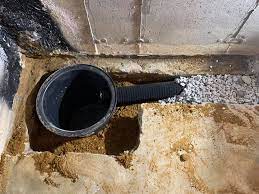 Interior Drainage Systems
Interior drainage systems collect groundwater beneath the basement floor and redirect it to a sump pump. This relieves pressure and prevents water from rising through the slab.
Sump Pump Installation
A properly sized sump pump removes collected water safely away from the foundation. In many homes, this is the most reliable long-term solution.
Crack and Joint Repair
Sealing cracks and floor-wall joints helps prevent moisture intrusion, but only when combined with proper drainage.
Long-Term Prevention Strategies
Stopping water from coming up through the basement floor requires a complete moisture management plan.
Long-term prevention often includes:
Interior drainage and sump systems
Exterior grading improvements
Gutter and downspout extensions
Ongoing system maintenance
A professional inspection ensures no contributing factor is overlooked.
When to Call a Basement Waterproofing Professional
If water repeatedly appears on your basement floor after rain or snowmelt, it is time to call a professional. Early intervention prevents damage from spreading and reduces long-term repair costs.
Professionals evaluate water pressure, drainage paths, and foundation conditions to design a solution that fits your home.
FAQs About Water Under Basement Floors
Is water coming up through the floor a plumbing issue?
In most cases, no. It is usually caused by groundwater pressure rather than leaking pipes.
Can this problem fix itself?
No. Without proper drainage, hydrostatic pressure will continue to force water upward.
Does this mean my foundation is failing?
Not necessarily, but ongoing moisture can lead to structural problems if ignored.
Will a sump pump solve the issue?
When combined with proper drainage, a sump pump is often the most effective solution.
Final Thoughts
Water coming up through your basement floor is a clear warning sign that groundwater pressure needs to be managed. While surface fixes may seem tempting, long-term solutions focus on drainage and pressure relief.
Professional basement waterproofing protects your foundation, your belongings, and your peace of mind.

Mike Perry is the esteemed owner of ARK Basement Services, a premier company specializing in basement waterproofing and foundation repair services. Under Mike’s leadership, ARK Basement Services has established itself as a trusted leader in the industry, known for delivering high-quality, reliable solutions to homeowners facing basement and foundation issues. Mike’s commitment to excellence, combined with his extensive knowledge and experience in the field, has been instrumental in building a company that is dedicated to ensuring customer satisfaction and the longevity of their homes. His hands-on approach and dedication to utilizing the latest technologies and methods have set ARK Basement Services apart, making them a go-to provider for those in need of expert basement and foundation services. For more details on Mike Perry’s work and ARK Basement Services, visit their website at https://www.arkbasementservices.com/.