Remember last year when you discovered that pesky leak in your basement after a heavy rainstorm? You might be noticing some similar signs again: that musty odor, mysterious wet spots, or even visible cracks in the walls. These are all signals that your basement might need waterproofing. If left unattended, these issues can escalate, resulting in long-term damage that can be quite costly to repair. So, the big question is, do you know all the signs that indicate your basement needs waterproofing before it’s too late?
Unpleasant Musty Odors
If you step into your basement and are greeted by a damp, musty smell, this is a clear sign that you may need basement waterproofing. This unpleasant odor isn’t just a mere inconvenience; it’s an indicator of a more serious issue.
Let’s explore the details. That musty smell is caused by mold and mildew growth, which thrive in damp and humid conditions. It means water’s getting into your basement somehow. It could be seeping in through cracks in the foundation or walls, faulty window wells, a leaky pipe, or poor drainage around the house.
You shouldn’t ignore these odors. Prolonged exposure to mold can lead to various health issues, including allergies, headaches, and respiratory problems.
Additionally, if left unchecked, the water can cause significant structural damage to your home over time.
In this scenario, waterproofing your basement becomes essential. It’s not just about getting rid of the smell; it’s about protecting your home and your health.
Wall and Floor Cracks
Cracks in your basement walls and floors aren’t just unsightly, they’re also a potential sign of serious waterproofing issues.
Understanding how to spot these cracks, as well as knowing their potential causes, can help you address the problem early on.
Let’s discuss how you can identify these cracks, explore their common causes, and look at some effective repair solutions.
Identifying Basement Cracks
Your basement’s integrity can be seriously undermined by the presence of wall and floor cracks. Identifying these cracks early on can save you from costly repairs down the line. It’s crucial to conduct regular checks, paying close attention to the walls and floors of your basement.
Start by thoroughly examining your basement walls. Look for vertical, horizontal, or diagonal cracks. These can range from hairline fractures to ones as wide as a quarter inch. It’s significant to acknowledge that not all wall cracks indicate a serious problem. Some minor cracks are simply cosmetic, but others can be a sign of deeper structural issues.
Next, inspect the floor. Keep an eye out for thin, snaking cracks running across the concrete surface. These cracks can often indicate a problem with the foundation.
Also, look for signs of water seepage around these cracks, as this can be a clear indication of a waterproofing issue.
Causes of Wall Cracks
The foundation of your home can be likened to a boat’s hull, withstanding an onslaught of forces that can cause cracks in your basement’s walls and floors.
Just as a ship can be damaged by harsh seas, your home’s foundation can suffer from shifting soils, heavy loads, and hydrostatic pressure.
Soil movement is a common cause of wall cracks. When soil expands due to moisture or contracts because of drought, it places immense pressure on your foundation.
Over time, this can lead to cracks. Similarly, if your home is built on clay soil, it’s more susceptible to movement and cracking.
Heavy loads, like the weight of your house or an overabundance of snow, can also cause cracks.
Your foundation is designed to bear a certain weight. When this limit is exceeded, it can result in damage, including cracks in your basement walls and floors.
Crack Repair Solutions
Taking action towards mending your basement’s fissures is an essential step in home maintenance. Wall and floor cracks can be indicators of potential water damage, so it’s vital to address these issues promptly.
Crack repair solutions vary based on the severity and type of the crack. For minor, hairline fractures, you can use a concrete patching compound. It’s a simple, DIY-friendly solution that involves cleaning the crack, applying the compound, and smoothing it out.
However, for more severe cracks, you might need a professional’s help. They’ll likely recommend either epoxy injections or polyurethane foam. Epoxy is a strong, durable solution that bonds with the concrete to effectively seal the crack.
Polyurethane foam, on the other hand, expands upon application to fill the crack and stop water intrusion.
Regardless of the solution you choose, it’s important to monitor the area closely after repair. If you notice the cracks reappearing or growing larger, it may indicate a more serious underlying problem like a shifting foundation.
In such cases, seek professional advice immediately.
Persistent Dampness or Wet Spots
If you’ve noticed persistent dampness or wet spots in your basement, it’s essential to identify the source of these moisture problems.
Understanding the causes of these wet spots can help you take the necessary steps to mitigate the issue.
Let’s explore how you can spot these signs, what might be causing them, and how to address persistent dampness effectively.
Identifying Moisture Problems
In your home, persistent dampness or wet spots could be indicative of a moisture problem. These issues aren’t merely aesthetic; they can signal serious structural concerns that need immediate attention.
Identifying moisture problems can be as simple as observing your basement. You might notice wet spots on the walls, floor, or ceiling, or a damp, musty odor that doesn’t go away.
But it’s not just about what you can see. What you can’t see can be just as damaging. Invisible moisture can seep into your basement, leading to issues like mold and mildew.
So how do you know if you have an invisible moisture problem? There are a couple of signs to watch out for. If your basement feels unusually humid, or if you’re noticing condensation on windows or walls, you may have an issue.
You might also see paint peeling or discoloration on walls and floors, or notice a damp, musty smell. These are all warning signs of a moisture problem.
Don’t ignore these signs. Catching and fixing a moisture problem early can save you a lot of time, money, and stress later on.
Be proactive in protecting your home.
Causes of Wet Spots
Several factors may lead to persistent dampness or wet spots in your basement.
First, cracks in your basement walls or floor can allow water to seep in, even if they’re tiny. These cracks can occur due to natural settling of the house, or because of more serious foundation issues.
Next, improper grading around your home could be a cause. If the ground slopes toward your house, it can direct rainwater straight to your basement.
In addition, insufficient or clogged gutters and downspouts can lead to the same problem, as they fail to channel away rainwater effectively.
Inadequate sealing on your basement walls or floor is another common cause. Without a proper seal, moisture can easily penetrate the concrete.
Moreover, if your home is older, the sealant may have deteriorated over time, necessitating a reapplication.
Lastly, interior sources of moisture, such as leaky pipes or high humidity, can also cause wet spots. These issues mightn’t be as apparent, but they’re just as damaging if left untreated.
Understanding these causes is essential to diagnosing your basement’s moisture problems.
However, it’s not enough to know the causes; you also need to address them promptly to prevent further damage.
Mitigating Persistent Dampness
Now that you’re familiar with the causes of wet spots in your basement, it’s time to tackle the issue head-on. Persistent dampness shouldn’t be overlooked; it’s a clear sign that your home needs immediate attention.
Begin by identifying the source of the problem. Water intrusion may be due to cracks in the walls or floors, poor drainage, or condensation.
Once the source is identified, take appropriate steps to fix it. For instance, you might need to seal the cracks, improve the drainage system, or install a dehumidifier to control the moisture levels.
Next, consider hiring a professional waterproofing company. They’ve the expertise to thoroughly assess the problem, propose effective solutions, and implement them without causing any further damage.
Their services might include installing a sump pump, applying a waterproof coating on the walls, or installing a French drain system.
Mold and Mildew Growth
Unchecked dampness in your basement often leads to the unwelcome growth of mold and mildew. These pesky fungi thrive in humid, damp environments, making a poorly waterproofed basement an ideal breeding ground.
Mold and mildew don’t only threaten your home’s aesthetic appeal; they’re potential health hazards, too. Exposure can lead to respiratory issues, allergic reactions, and other health problems for you and your family.
Black or green spots on your walls, floors, or ceilings are telltale signs of mold growth. Mildew often presents as a white, powdery substance. You might also notice a musty smell, a common indicator of fungal growth, even if you can’t see any visible signs. If you’re detecting these signs, it’s a clear indication that your basement needs immediate waterproofing.
Besides health risks, mold and mildew degrade your home’s structural integrity. They can cause wood to rot and paint to peel, leading to costly repairs down the line.
Waterproofing your basement prevents these issues, saving you money and ensuring a healthier living environment. Don’t delay if you notice signs of mold or mildew. Act promptly to waterproof your basement and protect your home.
Basement Flooding History
Over time, if your basement has a history of flooding, it’s a glaring sign that waterproofing is necessary. This isn’t an issue you can simply sweep under the rug. A history of flooding indicates a persistent problem with your home’s water management system. It could be a sign of improper grading, inadequate drainage, or a compromised foundation.
If you’ve noticed that your basement floods after heavy rain or snow melt, that’s a clear sign you need to waterproof. These conditions put a lot of pressure on your basement walls and floor. Without proper waterproofing, the water will find its way in, causing damage to your home and belongings.
Remember, it’s not just about the visible water. The moisture that comes with flooding can also lead to mold growth and structural damage, both of which can be costly to repair. Additionally, repeated flooding can lower your home’s resale value.
Don’t let a history of flooding dictate the future of your basement. Waterproofing is a proactive step that can save you from more serious and expensive problems down the line. It’s an investment in your home’s longevity and your peace of mind.
Efflorescence or White Chalky Substance
If you’ve ever spotted a white chalky substance on your basement walls or floor, you’re dealing with efflorescence. This isn’t just a cosmetic issue; it’s a strong indicator that water is infiltrating your basement.
Efflorescence appears when water seeps through concrete, brick, or stone, dissolves salts within the material, and then evaporates, leaving these salts on the surface.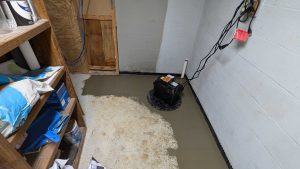
While efflorescence in itself isn’t harmful, it’s a warning sign that you can’t ignore. Persistent moisture can lead to significant structural damage over time, weakening your home’s foundation and making it more susceptible to mold growth, which can cause health issues for your family.
If you spot efflorescence, it’s important to act promptly. Cleaning the surface might remove the visible signs, but it won’t address the underlying issue.
To prevent further damage, you need to identify and fix the source of the water intrusion. This could involve repairing cracks in your foundation, improving drainage around your home, or installing a professional waterproofing system.
Ignoring efflorescence might seem tempting, but it’s a risk you can’t afford to take. The health of your home and family could depend on it.
High Humidity Levels
Moving from visible signs like efflorescence, another subtle yet impactful indicator of a moisture problem in your basement is high humidity levels. You can’t see it, but you can certainly feel it. When your basement is unusually damp or sticky, it’s a clear signal that the humidity levels are above normal.
High humidity in your basement doesn’t just make the space uncomfortable, it also provides a perfect environment for mold and mildew growth. These microorganisms can cause structural damage to your home and even lead to health issues. If you’re noticing a musty, damp smell, it’s likely due to elevated humidity levels.
Investing in a good quality hygrometer can help you monitor your basement’s humidity levels. If readings consistently show above 60% relative humidity, it’s time to bring in a professional to waterproof your basement. They’ll identify the source of the high humidity, which could be anything from poor ventilation to a leak, and provide a tailored solution.
High humidity isn’t just a comfort issue, it’s a potential threat to your home’s integrity and your health. Don’t overlook it; address it before it spirals out of control.
Don’t ignore these warning signs! If your basement emits musty odors, shows cracks, persistent dampness, or mold growth, it’s time to act. A history of flooding or the presence of efflorescence also point to serious issues. High humidity levels shouldn’t be overlooked either. Waterproofing your basement isn’t just about damage control; it’s an investment in your home’s future value and your family’s health. Don’t wait until it’s too late; safeguard your property today.

Mike Perry is the esteemed owner of ARK Basement Services, a premier company specializing in basement waterproofing and foundation repair services. Under Mike’s leadership, ARK Basement Services has established itself as a trusted leader in the industry, known for delivering high-quality, reliable solutions to homeowners facing basement and foundation issues. Mike’s commitment to excellence, combined with his extensive knowledge and experience in the field, has been instrumental in building a company that is dedicated to ensuring customer satisfaction and the longevity of their homes. His hands-on approach and dedication to utilizing the latest technologies and methods have set ARK Basement Services apart, making them a go-to provider for those in need of expert basement and foundation services. For more details on Mike Perry’s work and ARK Basement Services, visit their website at https://www.arkbasementservices.com/.