Permanent basement leak repair solutions address hydrostatic pressure and the clay bowl effect, the two main causes of water intrusion. Effective fixes include French drains, sump pump systems, cracked wall repair, carbon fiber straps, and foundation piering. ARK Basement Services diagnoses your specific leak source before recommending a lasting, warrantied repair method for your home.
Key Takeaways
Water intrusion causes mold growth, structural damage, and transforms basements into unusable spaces for homeowners.
ARK Basement Services in Pitcairn, Pennsylvania serves 20 employees dedicated to basement waterproofing solutions.
Common leak causes include excessive moisture, heavy rainfall, and foundation cracks requiring professional inspection and repair.
Basement leaks damage belongings, compromise home structural integrity, and create health hazards from mold and mildew growth.
Is Your Basement Leak Worse Than It Looks?
A small damp patch on your basement wall rarely stays small. Beneath that surface stain, moisture works into building materials, feeds mold colonies, and quietly stresses your foundation. What looks like a minor nuisance today often signals a structural or health problem building behind the scenes.
Basement moisture creates conditions where mold and mildew thrive. These organisms feed on organic materials and, in some residents, trigger respiratory problems and other serious health concerns. You may not see mold growing behind drywall or under flooring, but that doesn’t mean it isn’t there.
Why does a wet basement matter if I’m not using the space?
Even an unfinished basement affects the rest of your home. Air circulates upward through your living spaces, carrying moisture, mold spores, and musty odors with it. Ignoring the space below doesn’t protect the rooms above.
The financial stakes matter just as much as the health risks. A wet or leaking basement can make a house difficult, or even impossible, to sell. Buyers and inspectors both recognize water stains, efflorescence, and musty smells as red flags that lower offers or kill deals outright.
What does a basement leak after heavy rain really mean?
Water appearing after a storm usually points to a pathway, not a one-time fluke. Homeowners across the region dread seeing water leak into the basement following heavy rain. For good reason: that pattern tends to repeat with every significant storm.
Cracks in your foundation walls or floor are often the culprit. These cracks give water an easy route into your home, and every cycle of freezing and thawing can widen them. Left alone, that access point leads to costlier structural damage over time. Watch for these warning signs:
Recurring dampness or standing water after rainfall
Musty odors that persist even when the basement looks dry
Visible cracks in walls or the floor slab
Efflorescence, a white chalky mineral deposit on concrete
Addressing these signs early protects your home’s value and your family’s health.
What Actually Causes a Basement to Leak?
Groundwater pressure, not a single crack, drives most basement leaks. Hydrostatic pressure ranks among the primary causes of water intrusion in homes across Western Pennsylvania, Erie, and Northeastern Ohio. This force builds naturally as groundwater pushes against your foundation walls. Floor, searching for the path of least resistance into your basement.
Heavy rain accelerates the problem. As soil around your home absorbs rainwater, it becomes saturated, and that excess moisture creates mounting pressure against your foundation. Over time, this pressure finds every weak point in the concrete: joints, porous spots, and hairline cracks that widen under repeated stress.
Why do foundation cracks lead to basement leaks?
Cracks form when structural stress exceeds what your foundation can absorb, and once they appear, they become an open door for groundwater. If you spot cracks, or notice doors and windows sticking, your foundation may already be compromised. At that point, your home carries real risk of water entering the basement, whether you’ve seen a leak yet or not.
Is standing water always a sign of hydrostatic pressure?
Not every leak traces back to hydrostatic pressure, but persistent seepage after rainfall almost always does. Standing water along the base of your walls, especially after storms, points to soil saturation pushing moisture through your foundation’s weakest seams.
Left unaddressed, these conditions rarely improve on their own. Pressure against your foundation walls builds with every rainfall, and small cracks widen into larger structural concerns. Recognizing these warning signs early gives you a real chance to protect your basement. Your investment, before the damage spreads.
Which Repair Method Stops the Leak for Good?
Permanent basement dryness depends on matching the repair to the actual cause of water intrusion, not just patching the symptom. Basement leak repair services built around foundation stabilization. Interior drainage address the root problem rather than masking it for a season. Skipping this step costs homeowners repeat repairs, warped flooring, and mold remediation bills that grow every year water keeps finding its way in.
Foundation movement calls for a different fix than seepage through porous concrete. Piering, sometimes called piling, drives steel beams into the ground surrounding a home’s foundation to stop shifting and settling. Contractors drill these beams deep enough to rest on stable ground, such as bedrock, so the foundation stops moving for good. Compared with full foundation replacement, piering restores structural stability for a fraction of the cost.
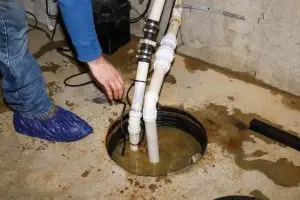
Standing water and damp walls point toward hydrostatic pressure, the force groundwater exerts against foundation walls and floors. Because basements face this pressure constantly, interior drainage systems form the backbone of a lasting waterproofing plan. Sump pumps pair with that drainage to move collected water away from the home before it pools.
Problem Signal
Root Cause
Long-Term Fix
Cracked walls, sticking doors
Foundation settling
Piering
Water on the floor, damp walls
Hydrostatic pressure
Interior drainage
Recurring pooling after rain
Inadequate water removal
Sump pump system
Does piering actually fix foundation cracks?
Piering stabilizes the structure that causes cracking in the first place, rather than simply sealing the crack. Once beams reach stable ground, the foundation stops shifting, which prevents new cracks from forming. Wall crack repair still handles existing damage, but piering addresses why it happened.
Will a sump pump alone keep my basement dry?
A sump pump works best paired with interior drainage, not as a standalone fix. Drainage channels water toward the pump, which then removes it from the home. Without both working together, hydrostatic pressure keeps finding new entry points.
Does Crawlspace Repair Differ From Basement Repair?
Yes — crawlspace repair and basement repair target different structural exposures and use different techniques. Basements expose both walls and floors to groundwater, while crawlspaces mainly face moisture at the flooring and around pipe areas. Homeowners across Western Pennsylvania, Erie, PA, and Northeastern Ohio often assume one waterproofing method fits both spaces, but that assumption leads to repairs that fail within a few seasons.
Basement walls hold back soil packed against concrete, creating hydrostatic pressure — the force of groundwater pushing against your foundation. That pressure demands interior drainage systems built to move water away before it penetrates the wall. Crawlspaces rarely face that same wall pressure. Instead, they struggle with condensation, trapped humidity that collects on framing, insulation, and ductwork.
What fixes work best for each space?
Basements typically rely on sump pumps to remove water that collects along the foundation perimeter. Crawlspaces call for a different toolkit: encapsulation and dehumidification. Sealing the crawlspace with a vapor barrier, then running a dehumidifier, controls moisture far more effectively than drainage alone could in that confined space.
Does fixing a basement pay off differently than fixing a crawlspace?
Yes. A properly waterproofed basement often becomes finished, livable square footage — a den, office, or extra bedroom. Crawlspace repair mainly protects storage conditions and structural framing rather than adding usable living area.
Here’s how the two compare:
Factor
Basement
Crawlspace
Primary exposure
Walls and floors
Flooring and pipe areas
Main threat
Hydrostatic pressure
Condensation
Core solution
Interior drainage
Encapsulation
Moisture control
Sump pump
Dehumidification
End result
Usable living space
Improved storage conditions
Skip the wrong system, and moisture keeps returning no matter how much you spend fighting it. Professional Basement Leak Repair Services account for these structural differences from the first inspection, matching the repair method to the space instead of applying a one-size approach.
When Should Homeowners Call a Repair Professional?
Homeowners should call a professional the moment they notice dampness, staining, or a crack that lets water through the foundation wall. Waiting turns a manageable repair into a costly renovation. Even a small leak demands quick, effective attention. Left alone, moisture feeds mold growth and invites damage that spreads far beyond the original crack.
Untreated leaks do more than stain drywall. Over time, persistent water intrusion weakens the foundation itself, compromising the structural integrity of the entire home. What starts as a minor seep can eventually affect load-bearing walls, door frames, and window alignment.
How do I know if my basement leak is serious?
If water appears after every rainfall. If cracks widen season to season, the problem has moved past a do-it-yourself fix. Musty odors, peeling paint, and efflorescence (the white chalky mineral deposit left by evaporating water) all signal ongoing moisture pressure that needs professional evaluation.
Homeowners across the region rely on trusted Basement Leak Repair Services rather than gamble on temporary patches. ARK Basement Services, based in Pitcairn, Pennsylvania, serves homeowners throughout the surrounding communities with hands-on foundation and waterproofing expertise. A team of 20 employees handles local repair projects, giving area homeowners direct access to trained crews rather than subcontracted labor. Calling early protects your foundation, your air quality, and your home’s long-term value.
FAQ
What causes most basement leaks?
Hydrostatic pressure, caused by groundwater pushing against foundation walls and floors, drives most basement leaks, along with the clay bowl effect and foundation cracks that widen through freeze-thaw cycles.
What are effective basement leak repair solutions?
Permanent fixes include French drains, sump pump systems, cracked wall repair, carbon fiber straps, and foundation piering. ARK Basement Services diagnoses your specific leak source before recommending a warrantied repair method.
Why does a leaking basement matter if I don’t use the space?
Air circulates upward through your home, carrying moisture, mold spores, and musty odors into living spaces. Water stains and efflorescence lower home value and complicate resale.
Conclusion
In closing, basement leak repair requires a comprehensive approach tailored to your home’s specific conditions and vulnerabilities. Whether you address surface water management, interior waterproofing, or structural concerns, the goal remains consistent: protecting your foundation and preserving your home’s integrity for years to come. Professional assessment ensures you invest in solutions that deliver lasting results rather than temporary fixes. Taking action promptly prevents minor moisture issues from escalating into costly structural damage, safeguarding both your property and your family’s well-being.
Mike Perry is the esteemed owner of ARK Basement Services, a premier company specializing in basement waterproofing and foundation repair services. Under Mike’s leadership, ARK Basement Services has established itself as a trusted leader in the industry, known for delivering high-quality, reliable solutions to homeowners facing basement and foundation issues. Mike’s commitment to excellence, combined with his extensive knowledge and experience in the field, has been instrumental in building a company that is dedicated to ensuring customer satisfaction and the longevity of their homes. His hands-on approach and dedication to utilizing the latest technologies and methods have set ARK Basement Services apart, making them a go-to provider for those in need of expert basement and foundation services. For more details on Mike Perry’s work and ARK Basement Services, visit their website at https://www.arkbasementservices.com/.
To provide the best experiences, we use technologies like cookies to store and/or access device information. Consenting to these technologies will allow us to process data such as browsing behavior or unique IDs on this site. Not consenting or withdrawing consent, may adversely affect certain features and functions.
Functional Always active
The technical storage or access is strictly necessary for the legitimate purpose of enabling the use of a specific service explicitly requested by the subscriber or user, or for the sole purpose of carrying out the transmission of a communication over an electronic communications network.
Preferences
The technical storage or access is necessary for the legitimate purpose of storing preferences that are not requested by the subscriber or user.
Statistics
The technical storage or access that is used exclusively for statistical purposes.The technical storage or access that is used exclusively for anonymous statistical purposes. Without a subpoena, voluntary compliance on the part of your Internet Service Provider, or additional records from a third party, information stored or retrieved for this purpose alone cannot usually be used to identify you.
Marketing
The technical storage or access is required to create user profiles to send advertising, or to track the user on a website or across several websites for similar marketing purposes.