Just as a sturdy umbrella shields you from a sudden downpour, crawl space encapsulation acts as your home’s shield against moisture, keeping your basement dry and safe. You’ve likely heard of this process, but do you know how it truly works and the multitude of benefits it brings to your home environment? Imagine not only having a dry basement but also improved air quality, reduced energy bills, and a check against mold growth. Intrigued? Let’s explore this further to reveal the magic behind the shield.
Key Takeaways
- Crawl space encapsulation prevents moisture from the ground from infiltrating into your basement, keeping it dry and free from dampness.
- The encapsulation process seals vents and openings, eliminating pathways for outside air and moisture to enter the basement.
- By installing a vapor barrier on floors and walls, encapsulation creates an effective moisture barrier, protecting the basement from potential water damage.
- Encapsulation reduces the risk of mold and mildew growth in your basement, which thrives in damp environments, thereby maintaining dry conditions.
- Conditioning the encapsulated space with a dehumidifier can further manage moisture levels, ensuring your basement remains dry regardless of the local climate.
Understanding Crawl Space Encapsulation
If you’ve ever wondered about crawl space encapsulation, it’s time to gain a solid understanding. This technique is a preventive measure that’s used to safeguard your home from moisture damage.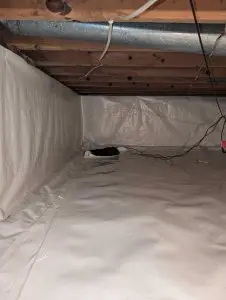
It’s a process where a heavy-duty polyethylene barrier is installed to cover your crawl space, including the floors, foundation walls, and sometimes even the ceiling.
When you encapsulate your crawl space properly, you’re creating a moisture barrier that prevents the ground’s dampness from seeping into your home. It’s a step often ignored, but it shouldn’t be as it’s essential for your home’s longevity.
Encapsulation also improves the energy efficiency of your house. You might be surprised to learn that unencapsulated crawl spaces can lead to high energy bills.
The reason? Without encapsulation, your HVAC system must work overtime to combat the cooler or warmer air that enters your home through the crawl space.
The Role of Crawl Space in Basements
You might wonder why your basement needs a crawl space.
It’s all about functionality and the benefits of encapsulation.
Let’s get into how this seemingly small area can play a big part in your home’s overall health and efficiency.
Crawl Space Functionality
Often, the role of a crawl space in a basement is overlooked. However, it’s essential to your home’s overall health. It acts as a buffer between your home and the damp soil below, and its functionality is key to maintaining the structural integrity of your home and the air quality within it.
If properly maintained, your crawl space can help regulate the humidity levels in your home. It’s also a convenient place for the installation of utilities like plumbing and wiring, keeping them away from the main living areas.
On the other hand, a neglected crawl space can become a breeding ground for mold, pests, and structural decay, leading to a host of problems. These can negatively impact the value of your home and your family’s health.
Here’s a quick snapshot of what your crawl space should and shouldn’t be:
| Crawl Space Functionality | Should Be | Shouldn’t Be |
|---|---|---|
| Humidity Control | Regulating humidity levels | A source of excess moisture |
| Utility Placement | Housing utilities | A dumping ground for debris |
| Pest Control | Shielding your home from pests | A breeding ground for pests |
Encapsulation Benefits
Encapsulating your crawl space, a vital step in basement maintenance, offers a plethora of benefits.
It’s not just about keeping your basement dry, but it also improves the overall health of your home.
When you seal your crawl space, you’re fundamentally creating a barrier between your home and the outside world. This barrier blocks out moisture, pests, and even harmful gases like radon.
You’ll notice a significant decrease in the musty odors often associated with basements. The moisture control also helps prevent the growth of mold and mildew, which can cause health issues and damage to your home.
But that’s not all.
Crawl space encapsulation can also enhance the energy efficiency of your home. By reducing the amount of cold air that enters your home through the basement, you’ll use less energy to heat your home in winter.
This can lead to substantial savings on your energy bills.
The Process of Encapsulating a Crawl Space
Beginning the journey of encapsulating your crawl space may seem challenging, but it’s a straightforward process when broken down into steps.
First, you’ll need to clean out the crawl space. That means removing any debris, dirt, or old insulation that may be present. You’ll also need to address any existing water or mold issues.
Next, you’ll seal off any vents or openings that lead outside. This prevents outside air from getting in and causing moisture problems.
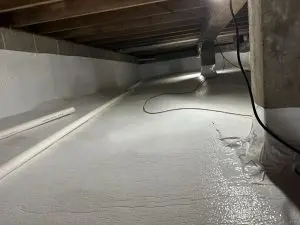
Once that’s done, you’ll install a vapor barrier. This is a thick plastic sheet that covers the floor and walls of the crawl space, preventing moisture from the ground from seeping into the crawl space.
The final step is to condition the space. That could mean dehumidifying the air, or it could involve installing a temperature-controlled system. It all depends on your specific needs and the climate where you live.
Materials Used in Crawl Space Encapsulation
Choosing the right materials is essential for a successful crawl space encapsulation project. You can’t just pick up any old plastic sheeting and tape, and expect it to work. You need materials designed for the job, to guarantee long-term protection against moisture and pests.
Now, let’s take a closer look at what you’ll need:
-
Vapor Barrier: This is a large, durable plastic or polyethylene sheet that blocks moisture from seeping into the crawl space. It’s typically 6 to 20 millimeters thick, the thicker the better for durability and effectiveness.
-
Seam Tape: This is used to seal the seams of the vapor barrier. You’ll want a strong, waterproof tape that can withstand the conditions in your crawl space.
-
Insulation: You’ll need this to regulate the temperature in the crawl space. Usually, rigid foam board insulation is used because it’s resistant to moisture and mold.
-
Dehumidifier: Finally, a dehumidifier can help control moisture levels in the crawl space, especially in humid climates.
Benefits of Crawl Space Encapsulation
Your home’s overall health stands to gain immensely from crawl space encapsulation. This method, mainly designed to prevent moisture build-up, offers a wealth of benefits that can greatly enhance your home’s comfort and value.
Firstly, it improves the air quality in your home. By sealing off the crawl space, you’re preventing the entry of damp, musty air that can carry harmful allergens and pollutants. So, you’ll breathe easier knowing your home’s air is cleaner and healthier.
You’ll also enjoy energy savings. Encapsulation acts as an insulation barrier, reducing the load on your heating and cooling systems. You’ll notice a considerable decrease in your energy bills, which is always a win.
Another major advantage is the protection it provides to your home’s structure. Moisture can cause considerable damage over time, but encapsulation keeps this at bay, prolonging the lifespan of your home’s foundational elements.
Lastly, it deters pests. Many critters are attracted to damp, dark places. But, once you’ve encapsulated the space, it’s no longer an inviting habitat. You’ll have peace of mind knowing your home is less susceptible to pest infestations.
In essence, crawl space encapsulation is an investment in your home’s longevity, health, and overall comfort.
Crawl Space Encapsulation and Mold Prevention
You might be wondering how crawl space encapsulation can help prevent mold growth.
It all starts with understanding the conditions mold loves to thrive in and how encapsulation disrupts these conditions. Keeping your crawl space dry is essential, and we’ll show you how encapsulation plays an important role in achieving this.
Understanding Mold Growth
Understanding mold growth is essential when dealing with crawl space encapsulation and mold prevention. You must know that mold is a type of fungus that thrives in damp environments, and your crawl space, if not properly encapsulated, can provide the ideal conditions for mold growth.
Here’s what you should know about mold growth:
-
Mold needs moisture: Mold can’t grow without moisture. When your crawl space is damp, it becomes a breeding ground for mold.
-
Mold needs a food source: Mold eats organic materials like wood and cardboard. If your crawl space has these materials and they get damp, mold will likely grow.
-
Mold can grow quickly: In the right conditions, mold can start to grow in as little as 24 hours.
-
Mold can be harmful: Depending on the type and the extent of exposure, mold can cause health problems like allergies and respiratory issues.
In a nutshell, understanding the conditions that facilitate mold growth helps you to better prevent it. With this knowledge, you’re better equipped to maintain a dry and mold-free basement through crawl space encapsulation.
Encapsulation’s Role in Prevention
While it might seem intimidating, encapsulating your crawl space plays a pivotal role in preventing mold growth. Mold thrives in damp, dark spaces, and your crawl space is the perfect breeding ground if left unchecked.
With encapsulation, you’re fundamentally creating a waterproof barrier that shields your home from this potential disaster.
Encapsulation involves the installation of a heavy-duty polyethylene barrier. This barrier covers the floor and walls of your crawl space, keeping out moisture. It’s like giving your home a waterproof coat, guaranteeing that water can’t seep in and create a mold-friendly environment.
But encapsulation isn’t just about slapping on a barrier. It’s a precise process. The space must be carefully measured, and the barrier installed correctly to guarantee a snug fit.
Any gaps or tears could let moisture in, defeating the purpose of the encapsulation.
Maintaining a Dry Environment
To maintain a dry environment in your crawl space, encapsulation is key. This process involves installing a high-quality vapor barrier along the floor and walls of your crawl space, effectively sealing it off from the elements. This protective barrier prevents moisture from seeping in, which can lead to a host of issues, including mold growth.
By maintaining a dry environment, you’re actively preventing mold, which thrives in damp, dark spaces. Mold can cause structural damage to your home and pose health risks to you and your family.
However, encapsulation isn’t the only step to take. Following these steps can further aid in maintaining a dry, mold-free environment:
- Regularly inspect your crawl space for signs of moisture or leaks.
- Make sure downspouts and gutters are directing water away from your home’s foundation.
- Install a dehumidifier in your crawl space to control humidity levels.
- Verify that your encapsulation system is properly maintained and repaired when necessary.
Maintaining Your Encapsulated Crawl Space
After encapsulating your crawl space, maintenance becomes a breeze. You don’t need to worry about major repairs, but you must guarantee to regularly check for any potential issues. Here’s a quick guide on how to maintain your encapsulated crawl space efficiently:
| Task | Frequency | Why it’s Important |
|---|---|---|
| Inspect the vapor barrier | Semi-annually | To check for rips or tears that could allow moisture in |
| Check for mold or mildew | Annually | To guarantee the space remains dry and healthy |
| Look for pest activity | Quarterly | Pests can damage the encapsulation material |
| Examine insulation | Annually | To make sure it’s intact and functioning properly |
| Test humidity levels | Monthly | To verify the dehumidifier is working correctly |
Following this maintenance schedule will help to prolong the life of your encapsulation system and guarantee a dry, healthy crawl space. Remember, it’s about preventing problems before they start. It’s always easier to spot a small hole in the vapor barrier or a minor mold issue before it becomes a larger problem. So, take the time to maintain your crawl space – you’ll be glad you did!
Hiring Professionals for Encapsulation
Deciding on whether to take on the task of encapsulating your crawl space yourself or hiring a professional can be tough.
You might be handy around the house and think you can handle it. But let’s consider why hiring a professional could be the smarter choice.
- Expertise and Experience: Professionals have the right training and experience.
They’ve seen it all and they know how to handle unexpected situations. You’re not only paying for the job, but also for the peace of mind.
- Time and Effort: Encapsulation is a labor-intensive job.
It could take you days, maybe even weeks, to finish it. Professionals can get it done faster and save you from the back-breaking work.
- Quality of Work: Professionals guarantee the work is done right the first time.
They use the best materials and techniques. They won’t cut corners, and that means a longer-lasting solution.
- Warranty: Most professional encapsulation services come with a warranty.
If something goes wrong, they’ll fix it at no extra cost.
In the end, it’s about guaranteeing your home stays dry and safe.
Don’t you think that’s worth investing in?
Case Study: Encapsulation Success Stories
Let’s take a look at some real-life success stories that highlight the benefits of professional crawl space encapsulation.
Consider the Smith family from Virginia. They’d been battling with a damp, moldy basement for years. After encapsulating their crawl space, they noticed a significant reduction in humidity levels. Their basement’s musty smell was gone, and they also saw a decrease in their energy bills.
The encapsulation provided a barrier that kept out the dampness and improved the overall air quality in their home.
Or take the case of the Johnsons from North Carolina. Their basement was always cold, making their home uncomfortable during winter. Encapsulating their crawl space helped to insulate their home better.
The cold drafts were no more, and their heating costs dropped.
Finally, look at the Davis family from Michigan. They’d a persistent problem with pests entering their basement. After encapsulation, the pests were nowhere to be found.
The barrier created by the encapsulation process deterred the pests from entering their home.
These are just a few examples of how crawl space encapsulation can help keep your basement dry and improve your home’s comfort and efficiency.
Frequently Asked Questions
What Is the Average Cost of Crawl Space Encapsulation?
You’re likely wondering about the cost of crawl space encapsulation. On average, you’re looking at between $1,500 to $15,000. It’s a range, but factors like size and condition of the space can affect the final price.
How Long Does the Encapsulation Process Typically Take?
It typically takes a team of professionals about one to two days to complete your crawl space encapsulation, though it varies depending on the size and condition of your crawl space. You’ll love the results!
Can Crawl Space Encapsulation Have Any Negative Impacts?
Like any home improvement, crawl space encapsulation might present some drawbacks. It’s not cheap, and you’ll need professionals to do the job right. However, the long-term benefits typically outweigh these initial challenges.
Do All Homes Require Crawl Space Encapsulation?
Not all homes require crawl space encapsulation. It’s essential if you’re dealing with moisture issues. However, if your crawl space is consistently dry and doesn’t have any mold or mildew problems, you likely don’t need it.
What Signs Should I Look for Indicating That Encapsulation Is Necessary?
You’re looking for signs like dampness, musty odors, or mold growth in your basement. Notice any pests? They’re attracted to moisture too. Also, check for insulation that’s falling apart. These all suggest encapsulation’s necessary.
Conclusion
So, you see, it’s no coincidence that a dry basement often comes hand in hand with crawl space encapsulation. This essential process not only keeps moisture at bay, but also safeguards your home from pests and harmful gases. Think about it, isn’t it worth investing in this preventive measure? After all, your home’s health and your comfort are closely intertwined. So, take that step, encapsulate your crawl space and enjoy a dry, safe, and healthy living environment.

Mike Perry is the esteemed owner of ARK Basement Services, a premier company specializing in basement waterproofing and foundation repair services. Under Mike’s leadership, ARK Basement Services has established itself as a trusted leader in the industry, known for delivering high-quality, reliable solutions to homeowners facing basement and foundation issues. Mike’s commitment to excellence, combined with his extensive knowledge and experience in the field, has been instrumental in building a company that is dedicated to ensuring customer satisfaction and the longevity of their homes. His hands-on approach and dedication to utilizing the latest technologies and methods have set ARK Basement Services apart, making them a go-to provider for those in need of expert basement and foundation services. For more details on Mike Perry’s work and ARK Basement Services, visit their website at https://www.arkbasementservices.com/.