Did you know that nearly 60% of U.S. homes suffer from below-ground wetness, according to the American Society of Home Inspectors? You might be one of them and you’ve probably heard a lot of advice on how to keep your basement dry. But beware, not all advice is good advice. Some methods you’ve heard about may not be as effective as they seem. So, what really works? Stick around and let’s debunk some common basement waterproofing myths together.
The Myth of DIY Waterproofing
Diving into the domain of do-it-yourself projects, you may be tempted to undertake basement waterproofing on your own. You’re confident, handy, and ready to save some money.
But, let’s demystify this right away: DIY basement waterproofing isn’t as foolproof as it’s often portrayed.
The lure of DIY waterproofing is understandable. There’s plenty of information online, and the prospect of cost-savings is tempting.
However, waterproofing is a complex task. It’s not just about applying a sealant; you’re dealing with a structure’s integrity, the safety of your home, and potentially damaging water issues.
You might apply a waterproofing paint and feel accomplished, but this is often a temporary fix. These paints can peel or flake over time, leaving your basement vulnerable once again.
If your basement has cracks or structural issues, a simple sealant won’t do. It requires a professional understanding of foundation construction and hydrostatic pressure.
Moreover, DIY attempts may void any existing warranties on your home or basement. This could result in major financial repercussions should damage occur.
Understanding the Exterior Waterproofing Fallacy
You may be under the impression that exterior waterproofing is the ultimate solution to keep your basement dry.
However, it’s essential to address the misconceptions surrounding its efficiency and discuss viable alternatives.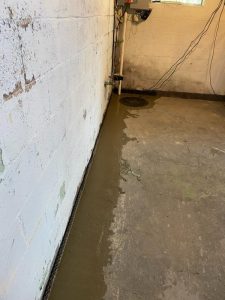
In this section, we’ll debunk the exterior waterproofing fallacy and guide you towards more effective waterproofing strategies.
Exterior Waterproofing: Misconceptions
A surprising number of homeowners harbor misconceptions about exterior waterproofing. You might be one of them, thinking it’s a cure-all solution to dampness and leaks. However, that’s not entirely accurate, and it’s vital to dispel such myths.
One common misconception is that all exterior waterproofing methods are the same. They’re not. Different methods are designed for different situations. For instance, some work better for walls that are below ground level, while others are more suitable for above-ground walls.
Another fallacy is that exterior waterproofing is a DIY task. Though it’s tempting to save money, waterproofing requires professional knowledge and tools. Without these, you risk causing more damage to your home.
It’s also a myth that exterior waterproofing will make your basement completely waterproof. It helps reduce the risk of water damage, but it’s not foolproof. Other factors, like your home’s overall construction and local climate, play a significant role too.
Lastly, don’t believe the myth that exterior waterproofing is always the best option. It might be in some cases, but each home is unique. Other methods, such as interior waterproofing, might be more suitable for your situation.
Efficiency of Exterior Waterproofing
Homeowners’ perception of exterior waterproofing’s efficiency often leans towards fallacy. You might think that applying a waterproof barrier to your home’s outside walls will solve your basement’s moisture problems. In reality, it’s not that simple.
While exterior waterproofing can indeed help prevent water from penetrating your basement walls, it doesn’t address the root cause of most basement water issues: hydrostatic pressure. This pressure builds up when water saturates the soil around your home, pushing against the foundation and causing leaks. Even with exterior waterproofing, water can still find its way into your basement through cracks and gaps.
Additionally, exterior waterproofing isn’t a permanent solution. The waterproof barrier can deteriorate over time, especially with exposure to the elements. You’ll then need to redo the entire process, which can be costly and time-consuming.
Furthermore, exterior waterproofing often requires extensive excavation around your home to reach the foundation walls. This can disrupt your landscaping, and there’s also the risk of damaging underground utilities.
Alternatives to Exterior Waterproofing
Given these challenges with exterior waterproofing, it’s worth considering other options for managing basement moisture.
Interior waterproofing, for instance, might be a viable solution for your home. This method doesn’t prevent water from entering the basement walls, but rather, it manages the water that gets in.
Interior waterproofing systems include coatings and sealants, which are applied to your basement walls and floor to prevent moisture from seeping in. They’re typically easier to install and less costly than exterior solutions.
However, they may not be as effective at preventing serious, long-term water damage.
Another option is a sump pump system, which collects water entering the basement and pumps it outside. Sump pumps can be a life-saver in areas prone to heavy rains and flooding.
If your basement has a high water table or is below the water level, you might consider a French drain system. This system channels water away from your basement, keeping it dry.
Interior Waterproofing: Fact or Fiction?
You might be wondering if interior waterproofing really works or if it’s just a myth.
Let’s clear the air; it’s not fiction, but a fact. Interior waterproofing, when done correctly, can indeed be a reliable solution to keep your basement dry.
This method involves the application of sealants and coatings to the inside of your basement. They’re designed to prevent moisture from penetrating the walls and floor.
However, it’s essential to understand that interior waterproofing isn’t a one-size-fits-all solution. The effectiveness largely depends on the source of the water problem and the condition of your basement.
For instance, it’s highly efficient in dealing with condensation issues. If you’ve got damp walls or a clammy basement, interior waterproofing might be the answer.
But for severe cases of water seepage, it may not be sufficient. In such situations, you’d need to combine it with other waterproofing methods.
The Misunderstood Sump Pump
While interior waterproofing can help manage moisture problems, it’s not always enough. That’s where the often misunderstood sump pump comes in.
Contrary to popular belief, a sump pump isn’t a luxury; it’s a necessity, especially if you’re living in an area prone to heavy rain or flooding.
A sump pump is a small pump installed in the lowest part of your basement or crawlspace. Its job is to help keep the area under the building dry and prevent it from flooding. When water levels rise, the sump pump kicks into action, diverting water away from your home.
Misconceptions surround the sump pump, with some folks believing it’s a one-size-fits-all solution. But the effectiveness of your sump pump depends on several factors, including its type, capacity, and installation.
Additionally, it requires regular maintenance to function efficiently.
Dehumidifiers: The Overrated Solution
You might think that a dehumidifier is your basement’s best friend, but let’s reevaluate this assumption.
It’s true that dehumidifiers can reduce humidity levels, but they’re not an all-encompassing solution to basement moisture problems.
In the next few sections, we’ll discuss their limitations and why they’re often overrated in the grand scheme of basement waterproofing.
Dehumidifiers’ Limited Effectiveness
Often, homeowners resort to dehumidifiers as a quick fix for basement moisture issues.
It’s true that these devices can help manage humidity levels and make your basement feel less damp. They’ll reduce the musty smell and even slow the growth of mold and mildew.
But, they’re not the ultimate solution.
Dehumidifiers can’t address the root cause of the moisture problem, which is usually water seeping in from the outside. They’re designed to pull moisture from the air, not from the walls or floor. So, if you’ve got a leak or a crack that’s allowing water in, a dehumidifier won’t stop it.
What’s more, dehumidifiers are expensive to run. They use a lot of electricity and require regular maintenance. Emptying the water bucket, replacing filters, and dealing with potential mechanical issues can add up regarding time and money.
In short, while dehumidifiers can play a role in managing basement moisture, their effectiveness is limited.
They’re not an extensive solution and shouldn’t be relied on in that capacity. There’s more to basement waterproofing than just reducing humidity. It’s essential to address the source of the water intrusion.
Understanding Dehumidifier Limitations
Despite the allure of dehumidifiers as an easy solution for basement dampness, it’s necessary to grasp their limitations. Dehumidifiers reduce the amount of moisture in the air, which in turn makes the environment less hospitable to mold and mildew. However, they’re not a catch-all solution; they merely treat the symptoms, not the cause of the dampness.
You may be under the impression that running a dehumidifier will solve all your basement’s moisture problems, but that’s simply not the case. These devices aren’t designed to handle severe, ongoing moisture issues. They can’t prevent water from entering your basement, nor can they address structural problems that are allowing moisture in.
Also, dehumidifiers are power-hungry appliances. They’ll raise your energy bill considerably if you’re running them continuously. Not to mention, they require regular maintenance and emptying. Over time, the costs can add up.
The Truth Behind Waterproofing Paint
Numerous homeowners rely on waterproofing paint as a quick fix for basement leaks, drawn in by its affordability and ease of application.
However, it’s vital to understand this solution’s limitations before you paint your basement walls with high hopes of a leak-free future.
Waterproofing paint, fundamentally a thicker version of acrylic paint, can indeed form a barrier against minor dampness.
However, it’s not a foolproof solution for significant water intrusion. It merely masks the problem, rather than addressing the root cause.
You’ll often find that over time, water pressure from the outside can lead to the paint peeling off, leaving your basement vulnerable once again.
Moreover, waterproofing paint does nothing to mitigate mold growth, a common issue in damp basements.
It also can’t repair existing damage to the structure.
Crack Injections: Temporary Fix or Long-term Solution?
You might be tempted to turn to crack injections as a solution for basement waterproofing. This process involves injecting a sealant into cracks in your basement’s walls or floor, with the aim of preventing water from seeping in. It’s a popular choice due to its affordability and the fact that it can be done without tearing apart your basement.
However, it’s important to understand that crack injections aren’t a cure-all. While they can successfully seal small cracks, they’re not as effective for larger ones. In fact, over time, these larger cracks can continue to grow, causing the sealant to fail and water to leak into your basement again.
Additionally, crack injections only address the symptom of the problem – not the underlying cause. If your basement’s water issues are due to poor drainage or a high water table, crack injections won’t solve the problem. They’re a temporary fix at best.
Mold Prevention and Basement Waterproofing
Keeping your basement dry isn’t just about preventing structural damage; it’s also an essential step in preventing mold growth. You see, most mold types thrive in damp, dark environments – like an unsealed basement.
Imagine, that musty smell isn’t just unpleasant; it’s a sign of a much bigger problem: mold spores spreading and potentially causing health problems for you and your family.
A waterproofed basement, on the other hand, becomes a hostile environment for mold. Moisture is kept out, eliminating the breeding ground for these harmful spores.
Waterproofing doesn’t only involve sealing cracks and leaks; it’s also about managing humidity levels. Dehumidifiers and ventilation systems can play pivotal roles in maintaining ideal dryness.
However, don’t be fooled by waterproofing paint alone as a solution. While it’s a good temporary fix, it won’t address the root of the problem if water’s seeping in from the outside.
You’ll need a more thorough solution that tackles the issue from both inside and outside. This might involve installing a drainage system or applying a waterproofing membrane to the exterior walls.
Professional Waterproofing: Worth the Investment?
When it comes to basement waterproofing, one might wonder if hiring professionals is worth the investment. You may be tempted to handle this task yourself, but let’s consider the advantages of professional services.
Professionals bring experience, expertise, and the right tools to the job. They’re skilled at identifying the source of leaks and moisture. They also know how to apply the most effective waterproofing methods, whether it’s interior sealants, exterior waterproofing, drainage systems, or a combination of these.
You might be worried about the cost, but think about the potential expenses of not hiring a professional. If you do it yourself and miss a vital step or make a mistake, you could end up dealing with more significant damage in the future. This could mean higher repair costs, decreased property value, and even health risks from mold or mildew.
Moreover, professional services often come with a warranty, giving you peace of mind. If any problems arise after the job, they’ll handle it at no extra cost.
Don’t let myths about basement waterproofing lead you astray, like a ship lost in a fog. DIY methods and quick fixes might seem appealing, but they’re often fleeting solutions. Dehumidifiers and waterproofing paint have their limitations, while professional waterproofing offers lasting protection. It’s an investment that pays off, providing accurate problem identification, effective methods, and warranties. Shield your home from moisture damage with professional waterproofing – it’s the compass guiding you to dry, protected shores.