When it comes to basement systems, you’ve likely heard about perimeter drains and dehumidifiers, but do you know how they stack up against each other? On one hand, perimeter drains, though invasive and costly, tackle the root cause of water intrusion by redirecting groundwater away from your foundations. On the other hand, dehumidifiers, easier to install, focus on reducing humidity to prevent mold and mildew, but don’t address external water issues. As you weigh up your options, consider your specific moisture problems, your budget, and the long-term effectiveness of each solution. Want to know which system is the best fit for your basement? Let’s dive deeper.
Key Takeaways
- Perimeter drains, sump pumps, and dehumidifiers are key components of basement systems aiming to prevent moisture issues.
- While perimeter drains redirect water around the home, dehumidifiers focus primarily on reducing indoor humidity levels.
- Installation costs differ substantially, with perimeter drains ranging from $5,000 to $15,000, sump pumps between $1,000 and $3,000, and dehumidifiers around $1,500 to $2,500.
- Perimeter drains require regular maintenance to avoid blockages and leaks, while dehumidifiers may increase energy bills if inefficient.
- Despite a higher initial cost, the long-term effectiveness of perimeter drains makes them a worthwhile investment for tackling root water intrusion problems.
Understanding Basement Moisture Issues
 A staggering 98% of all homes with basements experience some form of water damage. Now, imagine being part of that statistic. You’re likely to encounter issues like damp walls, a musty smell, or even visible water pooling.
Understanding the root cause of these moisture issues is your first step towards a dry, usable basement.
Groundwater is often the culprit. It can seep into your basement through cracks in the walls or floor, leading to dampness or flooding. Rainwater can also be a problem, especially if your home’s drainage system isn’t effectively diverting water away from your foundation.
Condensation is another common issue. When warm, moist air comes into contact with your cooler basement walls and floors, it can condense, resulting in dampness. This is more likely to occur in hotter months or in homes with inadequate ventilation.
Ignoring these issues isn’t an option. Over time, unchecked moisture can lead to mold growth, structural damage, and even health risks.
Understanding the cause of your basement’s moisture problems is essential. Once you do, you’re one step closer to finding the right solution.
But don’t worry, you’re not alone in this. We’re here to help guide you through your basement system options.
The Basics of Perimeter Drains
Let’s shift our focus to perimeter drains, an essential component of any effective basement system.
We’ll break down what they are, simplify the installation process for you, and guide you through their maintenance and troubleshooting.
It’s time to get your hands dirty and learn all about these silent saviors of your basement.
Understanding Perimeter Drains
Diving right into the heart of basement systems, you might find yourself wondering about perimeter drains. Fundamentally, perimeter drains, also known as French drains, are designed to prevent water from entering your home’s basement. They’re installed around the perimeter of your home, hence the name.
These drains play an important role in protecting your property. They work by collecting excess water from rain, melting snow, or ground water and redirecting it away from your house. This is particularly useful in areas prone to heavy rainfall or if your home’s built on a slope where water tends to collect.
But how do they do this? Perimeter drains are made up of a trench filled with gravel or rock containing a perforated pipe. This pipe is usually covered with landscaping fabric to prevent soil from clogging it. As water seeps into the trench, it’s collected by the pipe and directed away from your foundation.
Bear in mind, though, that they’re not a one-size-fits-all solution. The effectiveness of perimeter drains largely depends on your home’s specific conditions. That’s why it’s important to hire experienced professionals for assessment and installation.
But more on that in the next section.
Installation Process Simplified
Imagine standing in your yard, shovel in hand, ready to install your own perimeter drain system. It might seem intimidating, but with some basic knowledge, you’ll be able to tackle this job confidently.
First, locate the low points where water tends to pool, as the drain will be most effective here. Mark out the perimeter where you’ll dig your trench, making sure it’s at least two feet deep and slopes away from your home. You’re setting the stage for effective drainage, preventing water from seeping into your basement.
Now, lay down a bed of gravel in your trench. This provides a stable base for your drain pipe. Next, place your perforated pipe, holes facing down, and wrap it in a fabric sleeve. This prevents soil and debris from clogging your drain.
Cover the pipe with more gravel, then top it off with soil. You’ve now installed a basic perimeter drain. Remember, it’s essential that the drain pipe empties away from your home into a suitable area or storm drain.
Well done! You’ve taken a big step towards protecting your home from water damage.
Next topic? Maintenance and troubleshooting. But for now, give yourself a pat on the back.
Maintenance and Troubleshooting
Now that you’ve successfully installed your perimeter drain, it’s important to keep an eye on its performance. Regular maintenance guarantees the system’s longevity and ideal operation.
Firstly, check for any signs of blockage. If you’re noticing a damp basement or standing water, it’s likely your drain is clogged. You’ll need to clear out any debris or dirt that’s causing the issue. This can typically be done using a plumber’s snake or high-pressure water jet.
Next, monitor the system for any cracks or leaks. Over time, the pressure of groundwater can cause damage to your perimeter drain. If you spot any leaks, it’s essential to repair them promptly to prevent further damage.
Another significant step is to inspect the sump pump. It’s the heart of your system and it’s crucial to verify it’s functioning correctly. Clean it regularly, check for any signs of wear and tear, and replace it if necessary.
Lastly, don’t be afraid to call in the professionals for routine inspections. They’ll be able to spot potential issues and fix them before they become major problems.
Pros and Cons of Perimeter Drains
In the domain of basement systems, perimeter drains are a popular choice for many homeowners. They’re installed along the edge of your basement, acting as a barrier to prevent water from seeping in.
However, like any system, they come with their own set of pros and cons.
On the plus side, perimeter drains are incredibly effective at keeping your basement dry. They catch water before it can enter your home, directing it away safely. This system is particularly beneficial in areas prone to heavy rainfall or snowmelt.
It also helps to maintain the structural integrity of your home by preventing water damage.
However, it’s not all rosy. Installation of a perimeter drain can be quite costly and invasive. Your yard will need to be dug up to install the drain and, in some cases, your basement floor as well.
Maintenance can also be an issue. The drains must be regularly cleaned to prevent blockages, which means additional costs and effort.
Dehumidifiers: What You Need to Know
While it’s true that perimeter drains can be effective at managing moisture, they aren’t the only solution for a damp basement. You could also consider a dehumidifier, a device that’s designed to reduce the amount of humidity in the air. This helps keep your basement dry and comfortable, and it can prevent mold and mildew from growing.
Dehumidifiers work by drawing in moist air, cooling it down to condense the moisture, then reheating and releasing it back into the room. The resulting dry air reduces dampness and inhibits the growth of mold and mildew.
But before you rush out and buy one, here’s what you need to know:
- Dehumidifiers come in different sizes and capacities, so you need to match the device to your space.
- They consume energy, so consider the ongoing costs of operation.
- The collected water needs to be emptied regularly, unless you opt for a model with a continuous drainage feature.
- Dehumidifiers can be noisy, so think about where you’ll place it.
- In very damp conditions, a dehumidifier may not be enough on its own; you might need to combine it with other moisture management strategies.
Evaluating Dehumidifier Effectiveness
A great number of homeowners rely on dehumidifiers to tackle basement dampness. But how can you assess their effectiveness? Here’s a simple guide.
First, you’ve got to understand what a dehumidifier does. It’s a device that reduces excess humidity, preventing mold growth and musty odors.
But not all dehumidifiers are created equal. You need to take into account capacity, energy efficiency, and user-friendly features.
To determine if your dehumidifier is effective, start by checking the relative humidity in your basement. If it’s above 50%, then you may need a dehumidifier.
After running it for a few hours, check the humidity level again. It should be noticeably lower. That’s a good sign it’s working.
Secondly, look for physical signs. Do you see less condensation on windows? Does the basement smell less musty?
If yes, your dehumidifier is doing its job well.
Lastly, evaluate the energy usage. If your electric bill is skyrocketing, but the humidity level isn’t dropping, you might’ve an inefficient unit.
Opt for an energy-star rated model instead.
Additional Basement Systems Overview
As you continue to learn about basement systems, understanding their components is critical.
Consider the functions and benefits of dehumidifiers versus perimeter drains in your basement.
Let’s take a closer look at these essential elements to help you decide what’s best for your home.
Understanding Basement Systems
You might be wondering what exactly a basement system is. Well, in simple terms, it’s a combination of solutions designed to keep your basement dry and free from moisture-related issues. Properly implemented, these systems can protect your home from water damage, improve air quality, and increase your home’s value.
Understanding the types of basement systems is essential in deciding what’s best for your space. Here’s an overview:
- Sump Pumps: These work to remove water that has accumulated in a water-collecting sump basin. They’re usually installed in the lowest part of your basement to prevent flooding.
- Perimeter Drains: Installed around the edge of your basement, they direct water away from your foundation to a sump pump or storm drain.
- Dehumidifiers: These devices reduce humidity levels, making your basement less hospitable to allergens like dust mites, mold, and mildew.
- Waterproofing: This includes a range of methods and materials designed to prevent water from penetrating your basement.
- Insulation: Proper insulation can prevent condensation, reducing the chance of mold and mildew growth.
Essential Basement System Components
Steering through the world of basement systems, it’s crucial to understand the essential components that make these systems effective. Each component plays a unique role, helping to create a dry, safe, and usable basement in your home.
You’ll find a wide array of solutions on the market, but the most effective systems often include a combination of the following elements:
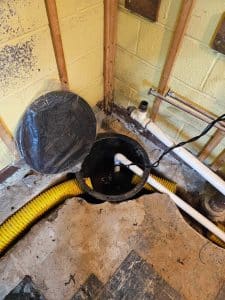
Perimeter Drains: These drains are installed around the edge of your basement floor to collect and direct water away from the foundation. They’re a key component in preventing water damage.
- Sump Pumps: Sump pumps work in conjunction with perimeter drains, pumping the collected water outside and away from your home.
- Dehumidifiers: These devices help control the humidity level in your basement, preventing mold growth and maintaining a comfortable environment.
- Vapor Barriers: These barriers are installed on your basement walls and floor to block moisture from entering the space.
- Insulation: Properly insulating your basement can prevent heat loss, making the space more energy-efficient and comfortable.
Understanding these components will help you choose a basement system that’s right for your home.
Comparing Costs of Different Systems
A homeowner’s budget often plays a pivotal role in the decision of which basement system to install. You want the best option for your home but you’re also mindful of the costs.
So, let’s dig into the price differences among the various systems.
Perimeter drain systems, for instance, can be a bit pricey, with costs ranging from $5,000 to $15,000. However, they’re extremely efficient at keeping water out of your basement, potentially saving you money in the long run from potential water damage.
Sump pumps, on the other hand, are a more budget-friendly option, typically costing between $1,000 and $3,000. They’re effective at removing water but may require regular maintenance, which could add to the overall cost.
Dehumidifiers offer another affordable solution, with prices usually around $1,500 to $2,500. They’re great at reducing moisture, but won’t help much with water intrusion.
Lastly, structural repairs can vary considerably in cost, depending on the extent of the damage. Minor repairs might be as low as $500, while major ones could skyrocket to $10,000 or more.
Choosing the Right System for Your Basement
Now that you’re up to speed on the cost differences between various basement systems, it’s time to zero in on the best fit for your home.
Remember, the cheapest option isn’t always the best. It’s essential to take into account your basement’s specific needs and circumstances.
Consider these factors when choosing the right system:
- Space Usage: Will your basement serve as a storage room, living area, or a combination of both? The intended use will determine whether you need a more robust system.
- Climate: If you live in a humid area, investing in a dehumidifier is a must. On the other hand, if your location is prone to heavy rainfall, a perimeter drain might be a better choice.
- Existing Conditions: If your basement is already damp or musty, you’ll need a more thorough solution.
- Budget: While you shouldn’t skimp on quality, your budget will inevitably influence your decision.
- Maintenance: Some systems require more upkeep than others. Consider the time and cost of maintaining your chosen system.
Choosing the right basement system is an investment in your home.
Make an informed decision that suits your needs and budget.
Conclusion
So, you’ve explored perimeter drains and dehumidifiers, among other basement systems. The best choice hinges on your specific moisture issues, budget, and desire for long-term effectiveness. Perimeter drains tackle groundwater problems but cost more. Dehumidifiers are easier on the wallet and combat mold, but don’t resolve external water problems. Weigh the pros and cons carefully. Ultimately, it’s about choosing a system that best fits your needs and keeps your basement dry and healthy.

Mike Perry is the esteemed owner of ARK Basement Services, a premier company specializing in basement waterproofing and foundation repair services. Under Mike’s leadership, ARK Basement Services has established itself as a trusted leader in the industry, known for delivering high-quality, reliable solutions to homeowners facing basement and foundation issues. Mike’s commitment to excellence, combined with his extensive knowledge and experience in the field, has been instrumental in building a company that is dedicated to ensuring customer satisfaction and the longevity of their homes. His hands-on approach and dedication to utilizing the latest technologies and methods have set ARK Basement Services apart, making them a go-to provider for those in need of expert basement and foundation services. For more details on Mike Perry’s work and ARK Basement Services, visit their website at https://www.arkbasementservices.com/.